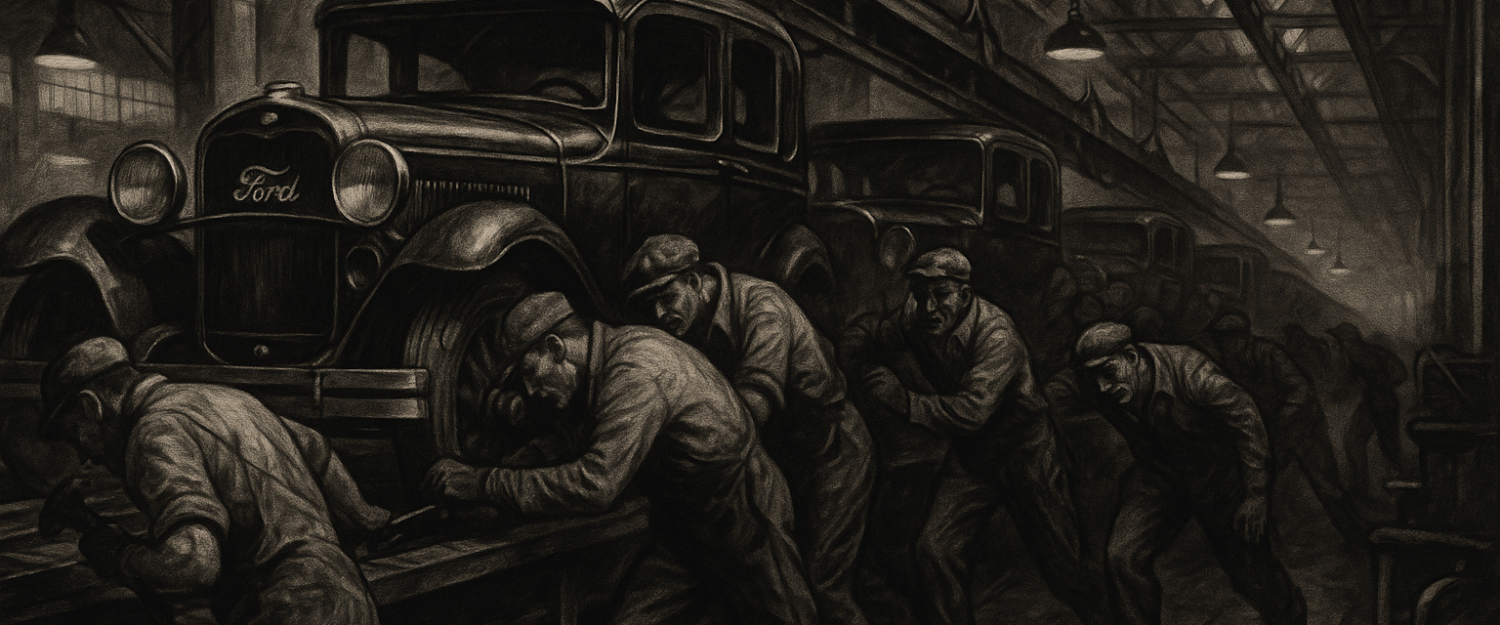

It was 1936, the Great Depression. Millions were out of work. Each morning in Flint, Michigan, desperate men gathered outside the gates at General Motors in the winter cold, frantic for work and a paycheck to feed their families. The fledgling UAW represented just 25,000 of the one million autoworkers toiling in U.S. auto plants and had just $25,000 in its treasury. Hardly the ideal time to launch a life-and-death strike against General Motors, a behemoth of industrial might in the city it ran with an iron fist.
Despite the daunting circumstances, the union entered the fray with a well-thought-out strategy. Wyndham Mortimer, a seasoned organizer and the first UAW leader assigned to the Flint organizing campaign, explained that the union selected Flint No. 1 because it housed the dies that stamped body components for Buicks, Pontiacs, and Oldsmobiles. The UAW leadership believed that a successful strike in this crucial location could effectively paralyze all GM operations.
Mortimer hadn’t yet unpacked his bag when the phone rang at the Flint hotel where he planned to stay.
“You had better get the hell back where you came from if you don’t want to be carried out in a wooden box,” a voice said.
Mortimer, a veteran of organizing drives in Cleveland, was not intimidated. “I was fifty-two, and nobody had taken me out in a box yet.” He ignored the call and got to work.
Conditions in Flint were brutal: speed-ups, layoffs, injuries, and management terror. The UAW was still young, broke, and weak, with little more than a charter and a handful of organizers. When workers launched the sit-down on December 30, 1936, they risked everything. GM retaliated by violating the newly enacted National Labor Relations Act—firing union supporters, refusing to bargain, and asking the courts and the state to crush the strike. The hypocrisy was plain for all to see: GM broke the law, then demanded that Gov. Frank Murphy call out the National Guard to enforce “order” on its behalf.
In 1932, when Murphy was mayor of Detroit, Dearborn police and Ford security guards opened fire on marchers demanding jobs for the unemployed, an end to racial discrimination in hiring, and the right to organize. They killed four and injured many others.
Having witnessed the slaughter at the 1932 Ford Hunger March, Murphy refused to let Flint become another bloodbath.
“I’m not going to allow lives to be lost,” he said, even as GM’s pressure mounted. He pressed the company to negotiate. On February 11, 1937, GM recognized the union. The sit-down victory in Flint, rooted in Roosevelt’s New Deal protections and secured by Murphy’s refusal to use the National Guard to break the strike, transformed the UAW into a permanent force in American life.
The contrast with Kansas City could not be sharper. On April 2, 1937, when Ford targeted union men for discriminatory layoffs at its Winchester Avenue plant, workers responded by sitting down on the spot. Families brought food, supporters rallied outside, and there was no police interference. Unlike the blood-soaked labor battles workers had come to expect, the Kansas City sit-down ended without violence. Ford backed down, reinstated the men, and even promised a wage increase. For a moment, it looked like Flint’s example might take root on the Missouri River.
But Henry Ford was never one to accept defeat. By October, after the plant shut down for model change, Ford locked loyal UAW members out and reopened with scabs and a company-dominated “Blue Card Union.” That’s when the repression began. City Manager H. F. McElroy, who had once been content to let police remain neutral, now flew to Dearborn to personally assure Ford and his enforcer Harry Bennett that Kansas City police would do what the law forbade—break the strike. The irony was stark: Ford demanded that city officials violate the National Labor Relations Act and even the Constitution’s guarantee of the right to assemble and picket peaceably. And McElroy agreed.
What followed was grim. Police raided the union hall, hurled tear gas into peaceful rallies, and arrested hundreds of workers, wives, and even children on the picket lines. Captains threatened to “beat heads in,” while Ford’s company union armed strikebreakers with blackjacks and shotguns manufactured inside the plant. By December, Kansas City jails were overflowing with strikers. Far from remaining neutral, the police had become Ford’s private army, enforcing the lockout and helping replace a real union with a company sham.
It was a tale of two strikes. In Flint, the UAW had a plan to overcome what many would have considered unfavorable circumstances. In Kansas City, Ford sparked the sit-down when it fired union men as they lined up to clock out for the day.
In Michigan, Gov. Murphy stopped the National Guard from breaking the strike, ensuring their victory. In Kansas City, the police actively worked to crush the union.
Franklin Roosevelt’s New Deal granted workers the right to organize. Still, it took both labor militancy and political courage to make those rights a reality. Murphy remained neutral and helped create the conditions for victory. McElroy sided with Ford, leaving Kansas City scarred by violence and division.
The lesson is clear. Workers can’t rely on politicians to save us. But when we fight smart and stand united—and when leaders in power refuse to bow to corporate demands—we can win lasting gains. Flint gave birth to a strong UAW and a powerful labor movement. Kansas City’s struggle, betrayed by its city manager, set the stage for a four-year lockout that dragged on until 1941. Wealth, power, and the arrogance that comes with it corrupted those elected to enforce the laws, but the collective action born of the solidarity among working people would prove stronger in the end.
© 2025, Pat Hayes
Source: Organize!: My Life as a Union Man by Wyndham Mortimer