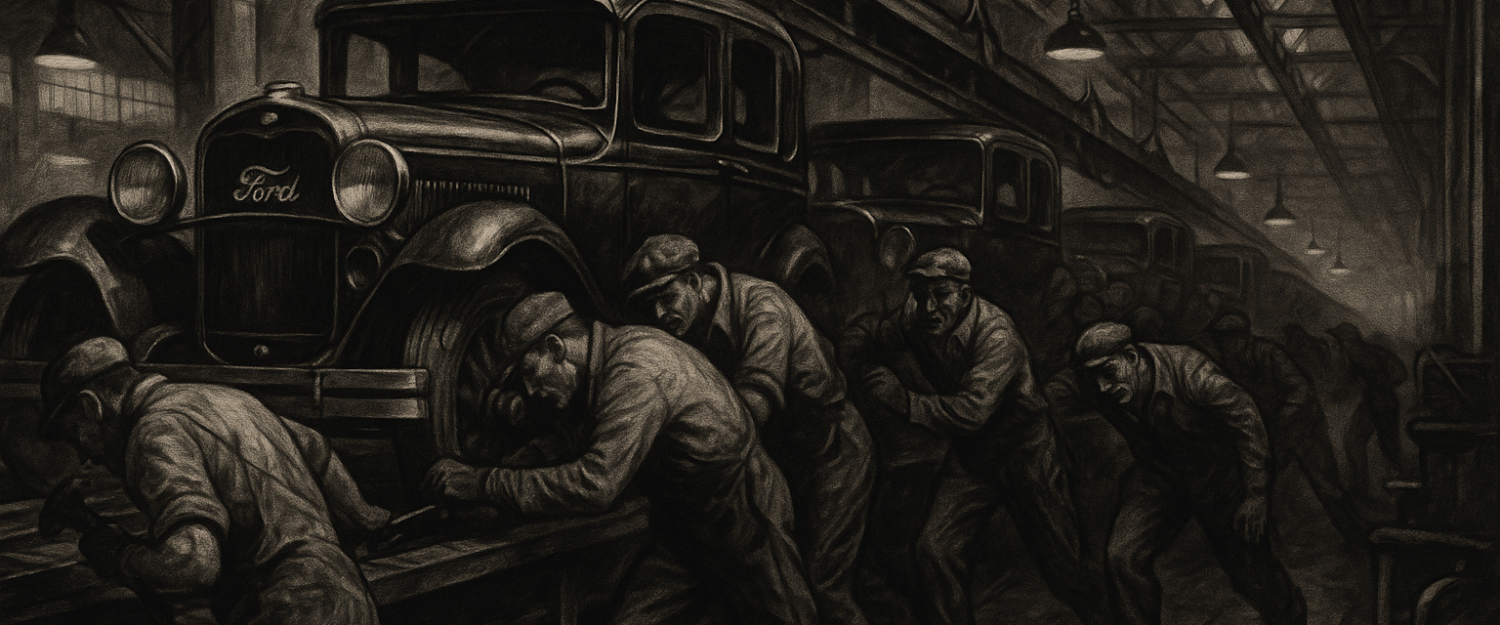
Anniversary of the Local 249 strike honors workers who risked everything for dignity on the job On April 2, 1937, Ford workers in Kansas City did something the company thought was impossible. They shut the line down, sat down inside the plant, and refused to leave. They weren’t thinking about history. They were thinking about…
Women’s History Month
The Mothers, Wives, and Daughters Who Fought for the UAW in Kansas City By Pat Hayes On a bitter December day in 1937, Kansas City police delivered a threat that laid bare what the Ford strike was really about. If union members kept sending pickets to the Winchester Avenue plant, Capt. Reddish warned Local 249…
No More Promises
The police arrived early Friday, May 4, to find the area around the Leeds plant deserted. There were no pickets in sight. At 6:30 a.m., a caravan of strike breakers slowed as they entered the plant. As the backup brought cars to a halt, 300 strikers suddenly charged the line from hiding places near the…
1934: The Kansas City Fisher Body Strike
It was 1:00 A.M. and dark when workers wearing white armbands began arriving at the General Motors Chevrolet-Fisher plant in the Leeds District of Kansas City to set up their picket lines. It was a warm night. The men lingered in loose knots, boots scuffing the gravel as they waited. New arrivals were waved into the groups…
Snatching Defeat From the Jaws of Victory
Part 2 of a three-part series on the 1934 Fisher Body strikes in Kansas City, Cleveland, St. Louis, and Tarrytown. While workers in Kansas City were voting to walk out, in Cleveland, 2,800 Fisher Body strikers jammed into the cavernous assembly hall at the Metal Trades Temple on Walnut Ave. They were there to hear…
More Brains Than Teeth
Workers at the General Motors Chevrolet—Fisher Body plant hadn’t had time to wash the dirt from their hands before climbing the steps of the Atheneum Club on Linwood Avenue in Kansas City on Saturday, April 28, 1934. Passing through four imposing Greek Revival columns at the entrance, 400 autoworkers jammed the formal auditorium. The overflow…
From Ford’s Goon Squad to Trump’s Database: The Fight Isn’t Over
A century ago, Henry Ford built a private spy army to stop the UAW from organizing his plants. He hired bruisers, informants, and stool pigeons to follow workers, listen to their conversations, and report anyone who even whispered the word union. Today, the Trump administration is attempting the same thing, only on a bigger scale…
When I Die I’ll Go to Heaven, Because I’ve Spent My Time in Henry’s Hell
Did Henry Ford really fire an employee named John Gallo simply for smiling? Although the story circulated widely among Ford workers, there is no real proof it is true, at least not the kind that would stand up in court; it’s what we might now call an urban legend. But, true or not, the story,…
From Sit-Down to Stand Up
Rebuilding Confidence: How Workers Found the Power to Win — and How They Can Again In the depths of the Great Depression, when a quarter of American workers were jobless and unions were little more than wishful thinking, the labor movement was revived by one thing above all else: confidence. It wasn’t born out of slogans…
Monarchs of the Diamond
UAW Local 249 and the Negro Leagues In 1949, when the Kansas City Monarchs came to Ypsilanti, Michigan, to play an exhibition baseball game, Alfred “Slick” Surratt put down his tools at the Detroit auto plant where he was working and went to the ballpark. The Monarchs were widely considered to be the “New York…