
Why We’re Here
Labor history is not just something you read about in dusty books or watch in old black-and-white newsreels. It is the living record of how working people, people like us, took on some of the most powerful corporations in the world and won.
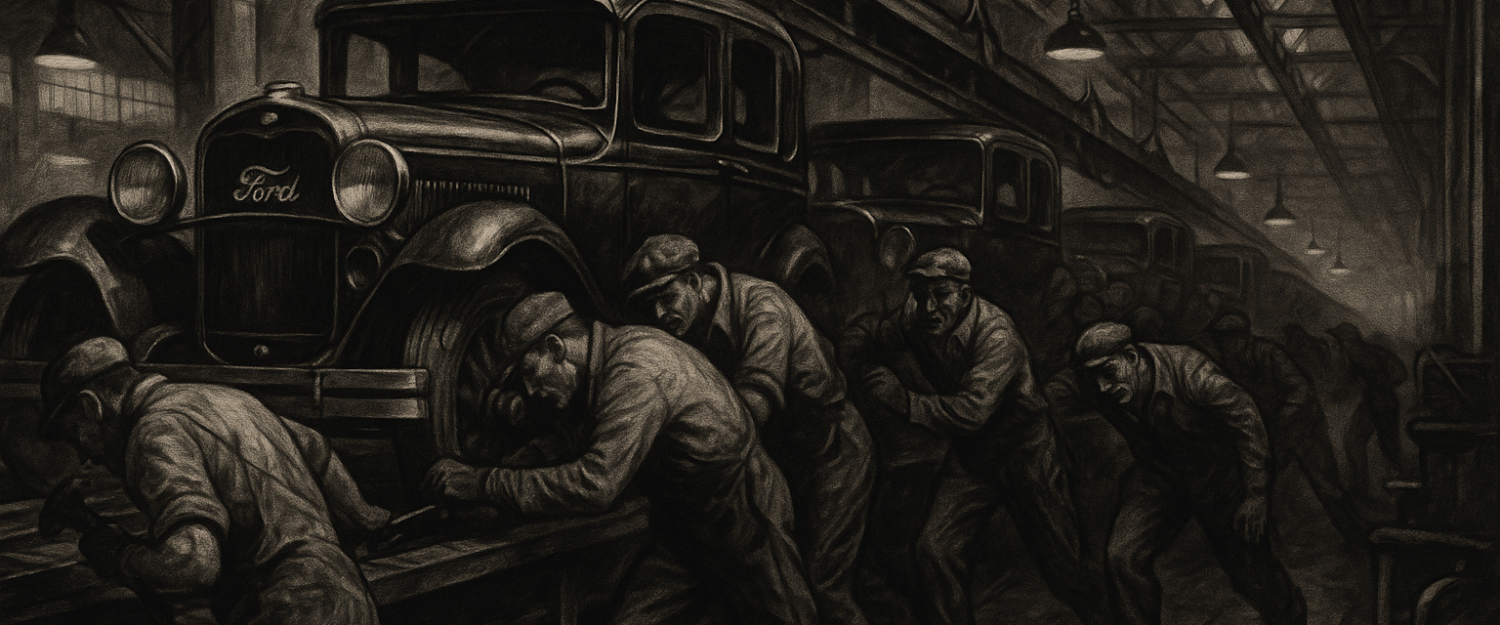
On April 2, 1937, in Kansas City, Missouri, autoworkers at the Ford Motor Kansas City Assembly Plant staged a bold sit-down strike. They refused to leave their workstations, holding the plant until Ford would recognize their union. The action achieved a temporary, short-term victory, but it did not result in a written contract. Instead, it was the opening salvo in a four-year battle for recognition. Local 249 members persevered through a long lockout during the depths of the Great Depression. Ford fought back with every weapon it had, but the workers who would become UAW Local 249 held firm, proving that solidarity, courage and staying power could keep hope alive through even the darkest times.
Their story is not just a piece of history. It is a lesson plan for how to organize, how to stand together and how to win.
Putting Kansas City on the Labor Map
Detroit will always be the Motor City. Flint will always be remembered for the legendary 1936–37 GM sit-down strike, the UAW’s first big win. Dearborn will forever be tied to the sprawling River Rouge complex and the violent battles to organize Ford there. But Kansas City has its own firsts that deserve to be shouted from the rooftops. It was the first Ford local chartered by the UAW, the first to stage a sit-down strike at a Ford plant, and the first to win a union contract with Ford.
These victories do not rewrite the broad outlines of the UAW’s founding, but they broaden our understanding of the epic, coast-to-coast fight to organize autoworkers. The sit-down strike in Kansas City was not a side story. It was a frontline battle in a national movement. By bringing Local 249’s story into sharper focus, we honor the truth. The birth of the UAW was not the product of one city, one plant or one moment. It was the result of a thousand battles fought by workers in cities big and small, all part of a united drive for dignity and power.
Why This Matters Today
The victories of the 1930s did not come easy, and they did not come from waiting for the law or politicians to do the right thing. They came from workers organizing, striking, and standing together, no matter the cost. Since the 1947 passage of the Taft-Hartley Act, corporate America and its political allies have worked relentlessly to weaken unions, divide workers, and erode the gains that generations fought to win. Union density has dropped, income inequality has soared, and democratic rights, both in the workplace and in the voting booth, are under attack.
The lessons from Local 249’s sit-down strike are as relevant now as they were in 1937. Organizing works when it is bold and strategic. Solidarity is stronger than fear. Worker power builds political power, and political power builds worker power. If we want to reverse decades of lost ground, we have to rebuild the kind of militant, democratic labor movement that shook corporate boardrooms in the 1930s.
Our Mission
Labor History Now exists to reclaim the stories of workers who fought and won against overwhelming odds, to draw clear lines from past battles to today’s struggles for economic and social justice, and to inspire new generations of activists to see themselves as part of a long, unbroken fight for dignity and democracy. This is a space to amplify the voices of workers, past and present, and to turn history into a weapon for today’s battles.
Join Us
The fight for worker power never ended. The names and faces have changed, but the forces we are up against are as ruthless as ever. By learning from our history, we arm ourselves for the fights ahead. We invite you to read, share and take these lessons to your union hall, your workplace and your community. Victories are not given. They are won. And the next one starts with us.