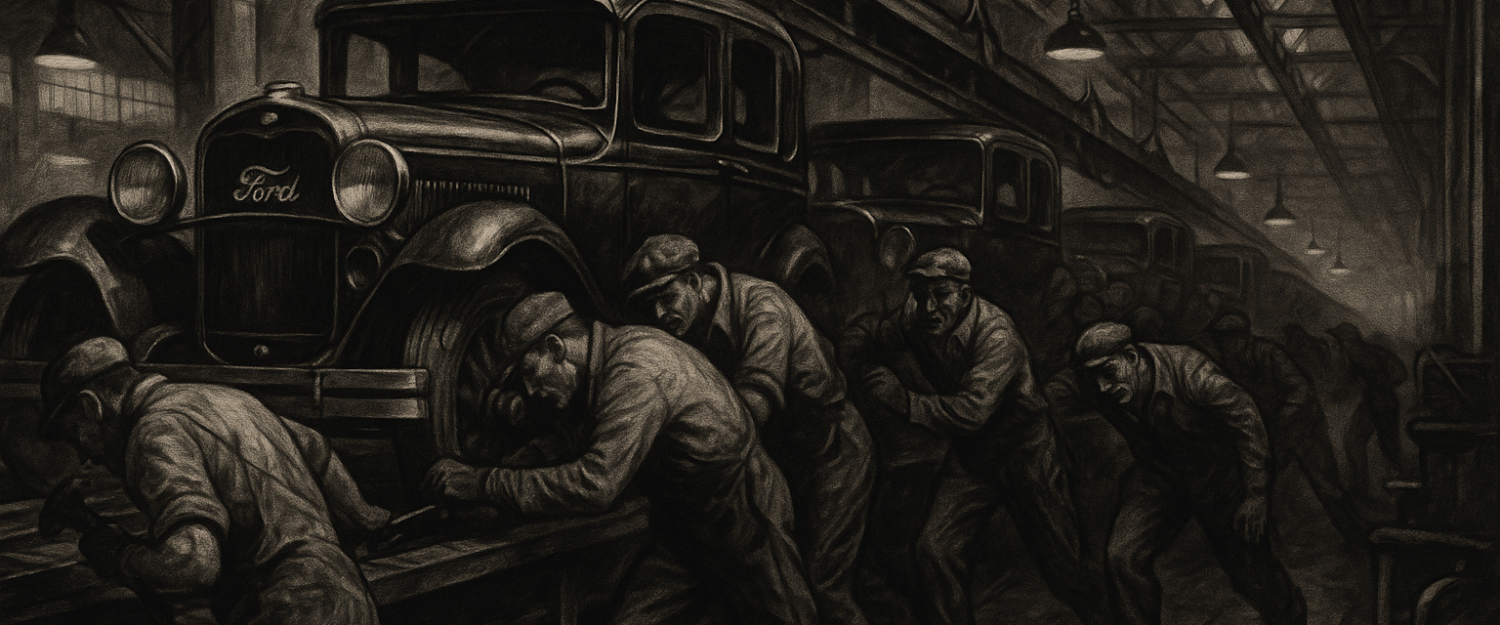

The police arrived early Friday, May 4, to find the area around the Leeds plant deserted. There were no pickets in sight. At 6:30 a.m., a caravan of strike breakers slowed as they entered the plant. As the backup brought cars to a halt, 300 strikers suddenly charged the line from hiding places near the plant to attack the cars. Jumping on the running boards, they reached through the windows to pull the drivers out. The police quickly counterattacked and drove the strikers off, with both sides nursing bloody noses. As the morning wore on, strikers built barricades and threw stones at workers arriving in the area to cross the picket line. That night, two strikers were shot and slightly wounded in confrontations with the strikebreakers. John Harrigan, a striker who was attacked the previous day, was reported to be near death after suffering a head injury.
The next day, Saturday, the plant was closed, and both sides took the day off.
On Sunday, workers once again filled the Atheneum to hear a proposal from Richard Byrd, the labor representative on President Roosevelt’s Automobile Labor Board. Byrd flew in from St. Louis, where he’d convinced workers there, just as he had in Cleveland, to end the strike with the promise that the company would rehire the strikers without discrimination against union men if they ended the strike. For many in the crowd at the meeting, still nursing wounds from the week-long battles on the picket line, it was a bitter pill to swallow. Forced to sit through Byrd’s praise for company officials, they made the best of a bad situation, voting nearly unanimously to end the strike.
After the meeting, Patterson was assured that a resolution to the Kansas City dispute would be reached within a week and that the local would receive “square deal” regarding the reemployment of strikers, laid-off workers, and those who had been discharged. But, in the months that followed, the promises made by Byrd, Francis Dillon, General Motors, and Fisher Body proved hollow. The plant managers at Leeds claimed not to know about the agreement. Nearly two months later, ninety-nine Chevrolet workers and seventy-six Fisher Body workers who should have been returned to work under the agreement were still on the street.
“Don’t send any more promises,” Patterson wired Byrd on June 2, “We were in better shape before the agreement.”
Members who once stood strong on the picket line now dropped away from the union. Nothing Patterson, Martin, or Swift could say stopped them from tearing up their union cards.
Endnotes
- Kansas City Star, May 4, 1934, reporting on clashes outside the General Motors Leeds plant, including the early-morning confrontation between strikers, strikebreakers, and police.
- Kansas City Times, May 4, 1934, coverage of barricade-building, stone-throwing, and injuries sustained during picket-line fighting at the Leeds Chevrolet–Fisher Body plants.
- Kansas City Star, May 5, 1934, report of two strikers shot and wounded in confrontations with strikebreakers; see also follow-up injury reports concerning John Harrigan.
- Kansas City Star, May 6, 1934, account of the temporary plant shutdown on Saturday following the violence of the preceding week.
- Kansas City Star, May 7, 1934, coverage of the mass meeting at the Athenaeum featuring Richard E. Byrd, labor representative of President Franklin D. Roosevelt’s National Automobile Labor Board.
- St. Louis Post-Dispatch, May 2–3, 1934, reporting on Byrd’s intervention in the St. Louis Chevrolet–Fisher strike and assurances of reinstatement without discrimination.
- Cleveland Plain Dealer, April 30, 1934, reporting on the Fisher Body workers’ vote to return to work following non-discrimination assurances from the Automobile Labor Board.
- Kansas City Star, May 8, 1934, reporting that Kansas City workers voted nearly unanimously to end the strike after Byrd’s assurances.
- Kansas City Star, June 2, 1934, publication of telegram from local leader Patterson to Richard E. Byrd protesting failure to enforce reinstatement promises.
- Kansas City Times, late June 1934, reports that ninety-nine Chevrolet and seventy-six Fisher Body workers remained unemployed despite prior assurances.
- Wyndham Mortimer, Organize! (Boston: Beacon Press, 1971), 73.