
The Mothers, Wives, and Daughters Who Fought for the UAW in Kansas City
By Pat Hayes
On a bitter December day in 1937, Kansas City police delivered a threat that laid bare what the Ford strike was really about.
If union members kept sending pickets to the Winchester Avenue plant, Capt. Reddish warned Local 249 leaders, the police would not just arrest them. If wives brought their children onto the picket line, the police would take those children away and send them to reformatories or orphanages.
It was a threat aimed squarely at women.
By then, dozens of UAW members had already been hauled off to jail for the crime of standing on a public sidewalk. Forty pickets were arrested the first day. Hundreds more followed. When the cells filled up, women stepped forward. They crossed icy streets carrying signs, some holding children by the hand, others pushing strollers. Twenty-two women and eight children were arrested together, booked for disturbing the peace, and locked up.
Police Director Otto Higgins insisted “no strike existed” at Ford. The women on the picket line knew better. So did the union. “We have a legal right to picket,” UAW organizer Carl Stevens said. “And we’ll have every jail in Kansas City full by night.”
That moment belongs at the center of Women’s History Month, because it captures a truth often lost in labor history. The fight for union rights was never just fought by men on the shop floor. It was fought by families. And women were often the ones who refused to back down when intimidation reached its ugliest form.
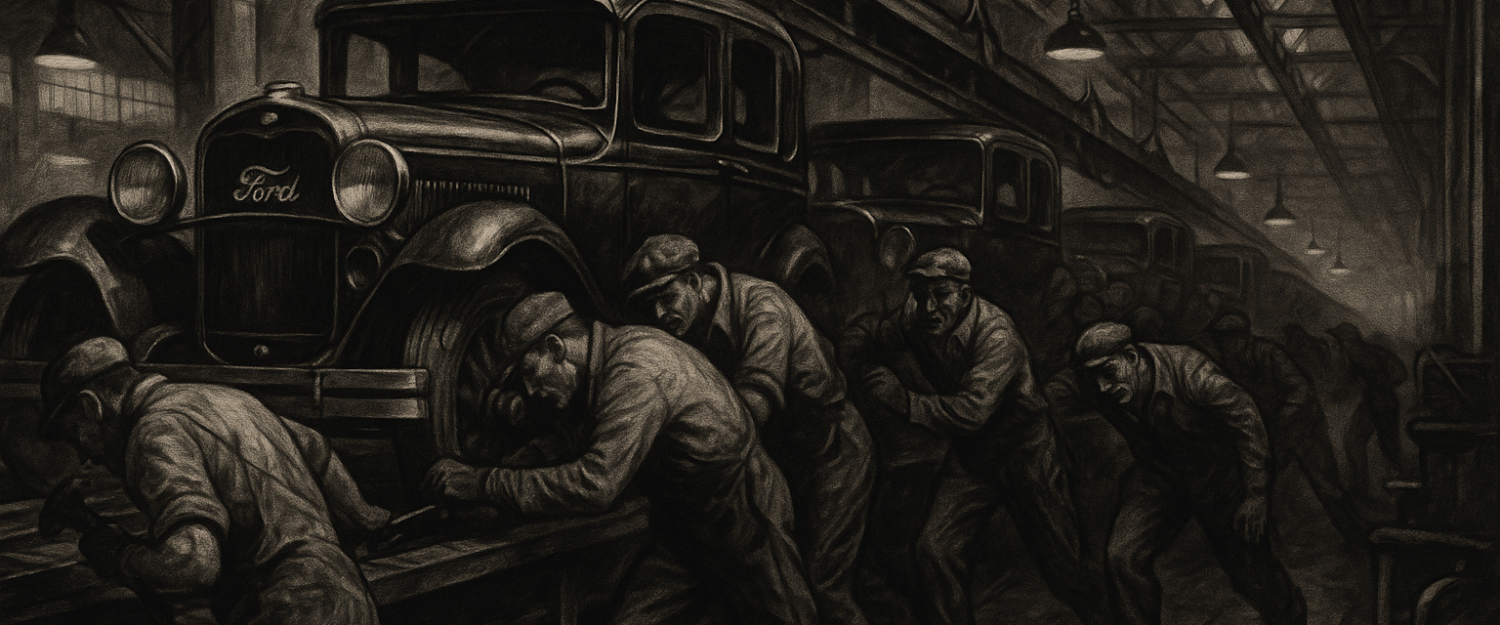
In 1937, Henry Ford barred women from working inside his Kansas City plant. Jobs on the line were for men only. But when Ford fired workers for refusing to renounce the UAW, when police swept picket lines and filled the jails, women became impossible to ignore. They took the place of jailed men. They brought their children because there was nowhere else to leave them. And when police threatened to tear families apart, they held the line anyway.
That courage did not come out of nowhere. Kansas City women had been doing this work for years.
Three years earlier, during the 1934 strike at the Chevrolet and Fisher Body plants in Leeds, women packed the Atheneum on Linwood Boulevard for mass meetings. Newspapers described mothers holding infants while listening to speeches about layoffs, speedup, and firings for union activity. At least a third of the audience was women, many with children in their arms.
They were not there as decoration. When picket lines formed, women were there too. They heckled strikebreakers. They shouted at men who crossed the line. They ran strike headquarters, organized food, poured coffee, and kept the operation going. When tensions boiled over, women did not stay on the sidelines. One Kansas City Journal report documented a woman worker leaving the Fisher plant being assaulted by a group of women strikers who tore her clothing and beat her during a clash near the gates.
The newspapers framed these moments as disorder. What they really showed was how deeply the fight cut into daily life. When a man lost his job in 1934 or 1937, the blow landed at home. Rent still had to be paid. Kids still needed shoes. Women understood that the stakes were not abstract. They were immediate and personal.
The companies understood it too. That is why police intimidation focused on families. In 1937, the threat to take children was not accidental. It was a calculated attempt to break the union by terrifying women into compliance. It failed.
Women kept coming. When men were jailed, women took their place. When police wagons pulled away, more stepped forward. By the end of the day, jails were full and the truth was exposed for everyone to see. The strike was real. The union was real. And the families behind it were not going anywhere.
That history matters for UAW Local 249 today. The rights members defend now were not won by isolated individuals. They were won by households willing to risk everything together. Women who never worked a minute on the Ford line still paid the price when Ford tried to crush the union. Some were beaten. Some were jailed. Some were threatened with losing their children.
Women’s History Month is not just about celebrating progress. It is about remembering who carried the burden when power was abused. In Kansas City, women carried it in their arms, on icy sidewalks, and into crowded jail cells.
The UAW has always said it is a family. The women of 1934 and 1937 proved it.