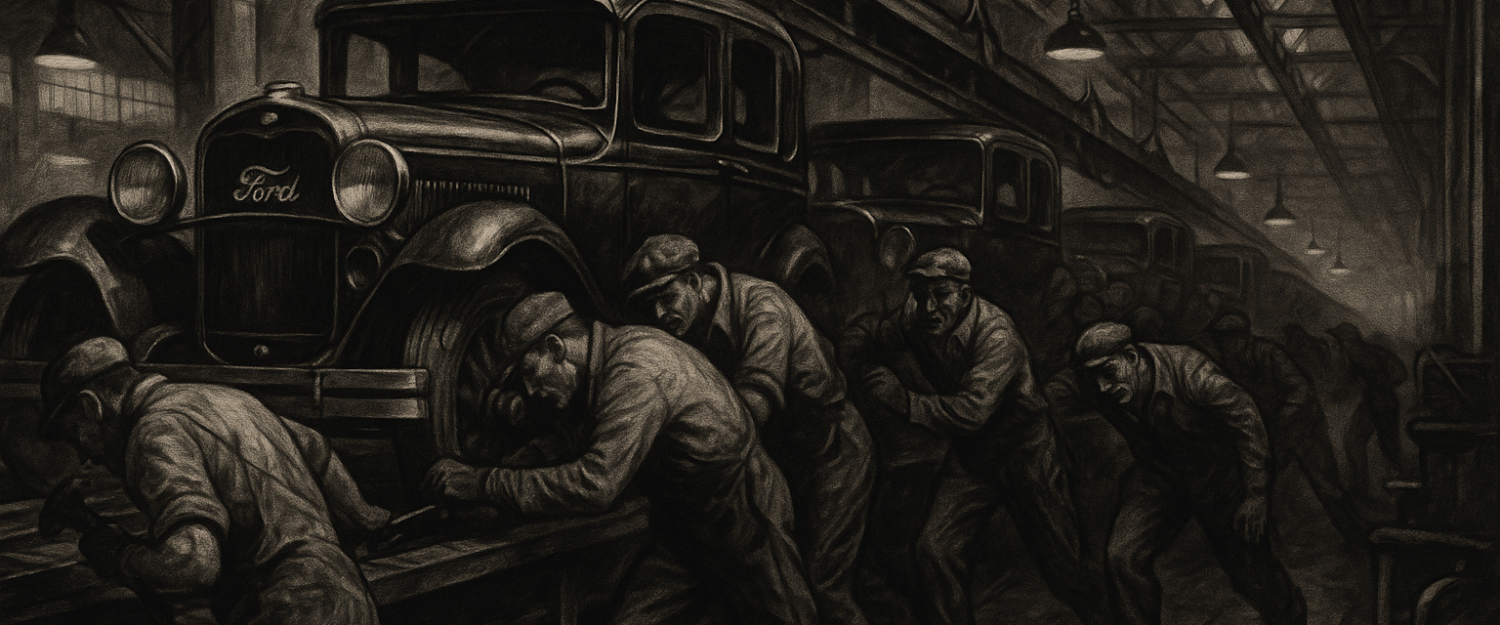

Anniversary of the Local 249 strike honors workers who risked everything for dignity on the job
On April 2, 1937, Ford workers in Kansas City did something the company thought was impossible. They shut the line down, sat down inside the plant, and refused to leave.
They weren’t thinking about history. They were thinking about survival.
Just hours earlier, foremen had walked the line, pulling badges and firing union men. Workers who had given years to the plant were tossed aside. One man who had worked 11 years put it plainly: he was fired “because I belonged to the union… I was wearing the wrong button.”
That was the breaking point.
Inside the plant, the mood was part defiance, part relief. For the first time, workers controlled their own time. Men leaned out the first-floor windows to find their wives and children in the street below, reaching out to shake hands, share news, and promise they would hold the line.
Others made phone calls home.
“Bring over some bedding,” one striker told his wife. “I don’t know how long.”
Outside, the community responded. Families brought food, blankets, and coffee. Supplies were hoisted through windows by rope. Restaurants stayed open. Workers from other plants drove by honking and shouting support.
Inside, the men organized themselves. Committees handled food, safety, and discipline. Some played cards with steel washers as chips. Others sang union songs. For the first time, many could walk to a drinking fountain or restroom without fear of being fired.
And hanging over it all was a sign that captured the truth of their lives:
“Lincoln freed the slaves. Ford brought them back.”
The message wasn’t subtle. Neither was the courage it took to say it.
When asked how long they would stay, the answer came back in one voice: “Till we win.”
They did.
Within days, the company agreed to key demands: seniority protections, better working conditions, and no retaliation against the men who sat down. Wages rose. Breaks were introduced. The line slowed. “It didn’t seem like the same Ford plant,” leader Gene Minshall later recalled.
But the victory came at a cost. The years that followed brought firings, blacklists, violence, and a long legal fight for recognition. Workers faced police, company-backed unions, and even gunfire.
Still, they held the line.
They filed charges. They organized. They fought for four years until the company was forced to recognize their union in 1941.
That’s the legacy of April 2.
Not just a strike. A turning point.
The men and women of Local 249 proved that when working people stand together, even the most powerful corporation in America can be forced to listen.
That fight built the wages, health care, retirement, and time off that generations of autoworkers depend on today.
The lesson still holds.
What they won, we have to defend. What they started, we have to finish.
Because the only reason working people have a voice on the job is simple.
They sat down. So we could stand up.
Endnotes
- Kansas City Star and Journal-Post strike coverage, April 2–3, 1937
- “We Work at Ford’s,” UAW Local 249 historical accounts
- Oral histories of Gene Minshall and Ford workers
- “Bloody Battles Only a Memory,” Kansas City Times, Sept. 29, 1976