
UAW Local 249 and the Negro Leagues
In 1949, when the Kansas City Monarchs came to Ypsilanti, Michigan, to play an exhibition baseball game, Alfred “Slick” Surratt put down his tools at the Detroit auto plant where he was working and went to the ballpark.
The Monarchs were widely considered to be the “New York Yankees” of the Negro Leagues, and Surratt’s friend, Jesse Williams, was a shortstop with the team. Before the game, Williams introduced Surratt to the Monarchs’ legendary player-manager, Buck O’Neil.
“Jesse tells me that you can hit the ball and you can catch the ball,” O’Neil said.
“I think I can,” replied Surratt.
O’Neil knew talent. He’d played in three Negro League East-West All-Star games. In 1946, he was a member of the Satchel Paige All-Star team that toured with Bob Feller’s white Major League All-Stars, and he would go on to sign Hall-of-Famers Ernie Banks and Lou Brock to major league contracts. O’Neil sent the scrappy, supremely confident Surratt into the outfield for batting practice. As Surratt ran down fly balls in the outfield, O’Neil saw that he could catch the ball, but could he hit? O’Neil decided to find out by putting him in the lineup. That day, Surratt found himself starting in the outfield and batting in the leadoff position. He wouldn’t have to wait long to back up his words with deeds.
I could run, too,” says Surratt, who worked for 51 years as a welder at the Ford Motor Kansas City Assembly Plant and was a member of UAW Local 249 after he retired from baseball.
Standing at the plate in his first at-bat, he decided on a chancy strategy to get on base and showcase his speed. He would lay down a bunt and then beat out the throw. Surratt’s gamble paid off. Safe on first, trying to catch his breath, Surratt hazarded a glance at O’Neil, who was coaching first base, to see what kind of impression he’d made.
“Brother,” the old pro said to his newest Monarch, “I believe you can carry the mail.”
Like millions of other young men growing up in America, Slick Surratt loved baseball and dreamed of playing pro ball. More than most, he had the talent to play the game at the highest level. When he was just 13 years old, he held his own on the men’s teams his uncle organized in Danville, Arkansas. Later, while serving with an army engineering outfit in the Pacific during World War II, he robbed the New York Yankee hero Joe DiMaggio of an almost certain home run in an exhibition game by making a sensational catch at the fence.
Despite that talent, until Monarch shortstop Jackie Robinson broke the color barrier with the Brooklyn Dodgers in 1947, the dream of a career in the majors for young, Black men, such as Surratt, remained a dream deferred.
After the war, Surratt left home in Arkansas for a job with Chrysler in Detroit. Like thousands of other Southern-born Blacks, Surratt was attracted by the Big Three’s high wages and the dignity a union contract negotiated by the UAW afforded to men and women of all races. In Detroit, he worked, attended the Michigan School of Trade, and played ball with the Nine Mile Road Tigers and the Detroit Stars.
“I didn’t think anybody could outrun me,” says Surratt. “I used to bet the guys I could steal second and not even slide.” O’Neil knew his rookie’s base-stealing antics would be a powerful distraction to opposing pitchers, so he made him the Monarchs’ regular leadoff batter. Surratt had a quick bat, too, and his .333 average put him in a position to make life tough for men throwing against the Monarchs.
At the end of his rookie year, Surratt got a chance to test his speed and bat against one of the greatest pitchers ever to play the game. Surratt faced the white, major league strikeout king, Bob “Rapid Robert” Feller. Feller won 20 or more games six times, struck out 2,581 batters during his career, and pitched three no-hitters. His fastball was once clocked traveling 60 feet 6 inches to the plate at 145 feet per second.
Although he’d never faced the Cleveland Indian right-hander before, Surratt led off for the Monarchs in the first inning. He went to the plate, looked down the third-base line, and got the sign to bunt. On the first pitch, Surratt squared around to face the pitch, but he couldn’t get his bat to Feller’s blazing fastball. Strike one.
Now he knew Feller could throw. Surratt looked down the third-base line for another sign, but didn’t like what he saw. The bunt was still on. This time, he managed to get his bat in front of Feller’s heat, but the force of the pitch ripped the lumber from his hands. Surratt heard a loud thunk behind him and turned to see his bat bounce high off the press box. Then he heard his teammates erupt in laughter. Strike two.
The joke over, O’Neil finally gave his rookie the sign to swing away. When Feller delivered the third pitch, Surratt looped it over his head into center for a base hit.
Exhibition games between Negro league teams and white all-stars helped pave the way for the integration of the major leagues, Surratt believed. White players who lost to Negro-league teams learned to respect the playing ability of the Black players, and they took techniques, such as the hook slide, pioneered in the Negro leagues, back to the majors with them.
While Surratt wholeheartedly supported the advancement of Black players into the major leagues, he retained fond memories of the Monarchs’ barnstorming days in the close-knit Black communities of the South. He stayed at the house of Martin Luther King Sr. when the team played in Atlanta, and attended Adam Clayton Powell’s Harlem church when the team played in New York. He heard Jazz vibraphonist Lionel Hampton warm up the crowd before games. Most of all, he remembered the crowd of 40,000 and more that regularly packed the fields where the Monarchs played.
“I played because I loved to play,” says Surratt. “It’s a business now.” The Monarchs paid a good wage, $300 a month and $3 a day when he played, but in those days, there was no such thing as an injury. Ball players who were too hurt to play simply didn’t get paid. Often, the team played three doubleheaders, in three different cities, in a single day.
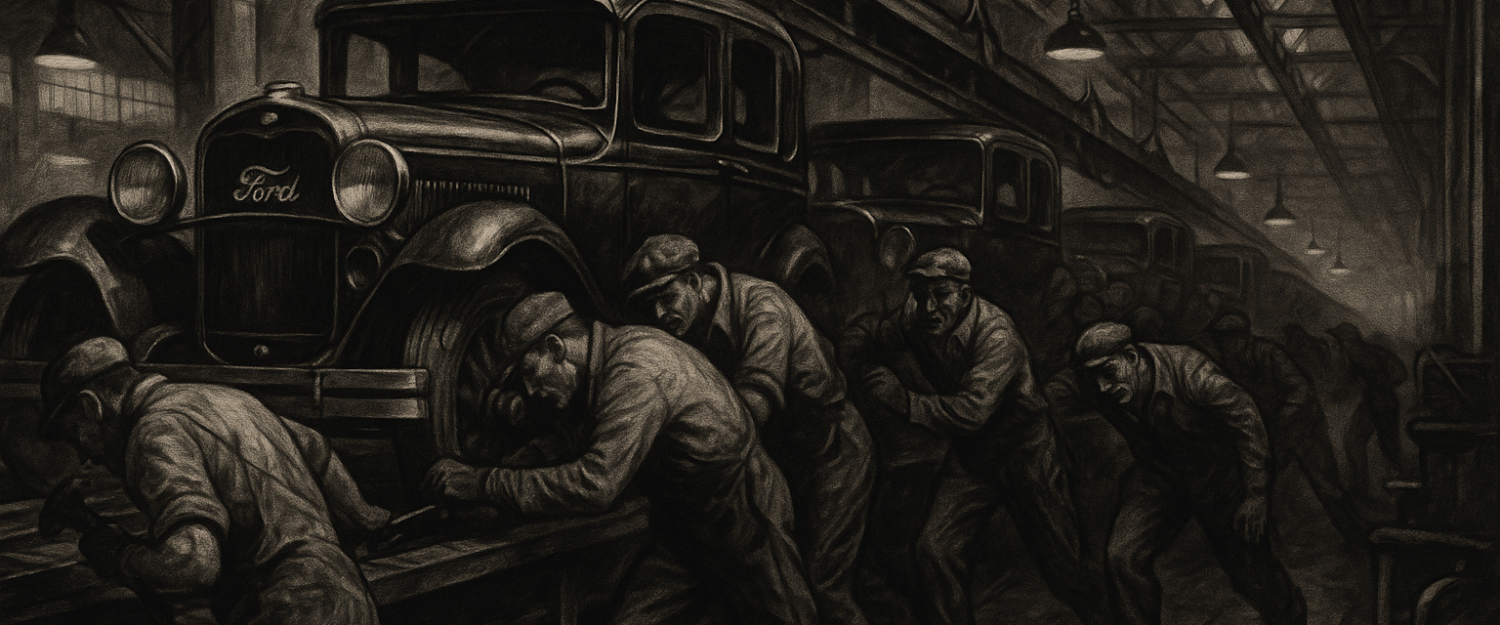
After leaving the Monarchs, Surratt took a job with the Ford Motor Co. in Kansas City. “I hired in on St. Valentine’s Day in ’52, planning on working until May,” Surratt recalled. He ended up staying for 51 years.
Surratt was the first Black member of UAW Local 249 to work as a metal finisher. A welder by trade, he became the first Black skilled tradesperson in the plant, as well. Surratt helped other Monarchs to get jobs at Ford when their playing days ended, most notably the pitching aces Connie Johnson and Lefty Gomez, and outfielder Doc Horn. Ulysses Hollimon, a pitcher with the Birmingham Black Barons, also worked at the plant.
Surratt helped to found the Negro Leagues Baseball Museum and was active in raising money to support its expansion. The museum, located in the historic 18th and Vine area of Kansas City, is the Cooperstown of the old Negro Leagues.
When Surratt retired in 2002, he could still carry the mail. He died February 15, 2010.
© 2025 Pat Hayes