
Rebuilding Confidence: How Workers Found the Power to Win — and How They Can Again
In the depths of the Great Depression, when a quarter of American workers were jobless and unions were little more than wishful thinking, the labor movement was revived by one thing above all else: confidence. It wasn’t born out of slogans or speeches, but out of a chain of events that made working people believe that collective action could actually change their lives. The election of Franklin Roosevelt in 1932 signaled a turning of the tide — the first time in years that government seemed to stand with the “forgotten man” instead of the banker or the boss. The New Deal that followed made that hope visible in the world: public works jobs, relief programs, and the promise that democracy could reach beyond the ballot box into everyday life.
That belief deepened in 1935 with the passage of the National Labor Relations Act, written by Senator Robert Wagner. Wagner’s central idea was revolutionary in its simplicity: democracy could not survive in politics if it was denied in the workplace. For the first time in American history, the federal government declared that the right to organize and bargain collectively was not a subversive act but a civic right — essential to the health of the Republic. This legal recognition, backed by the creation of the National Labor Relations Board, transformed how workers saw themselves. They were no longer troublemakers or radicals. They were citizens demanding rights guaranteed by law.
At the same moment, the founding of the Congress of Industrial Organizations (CIO) gave workers the organizational muscle to act on that confidence. The CIO’s vision of industrial unionism — uniting all workers in a factory, regardless of craft, race, or gender — turned isolated frustrations into a national movement. In Detroit, Toledo, Flint, and Kansas City, ordinary men and women saw their neighbors occupy plants, stand down police, and win contracts from corporations that once seemed untouchable. Each strike victory, from the Auto-Lite plant in Toledo to the Flint sit-down at General Motors, became proof that courage could be contagious. Success bred more success — and within a few years, the American working class had built both the middle class and a new kind of democracy rooted in the shop floor.
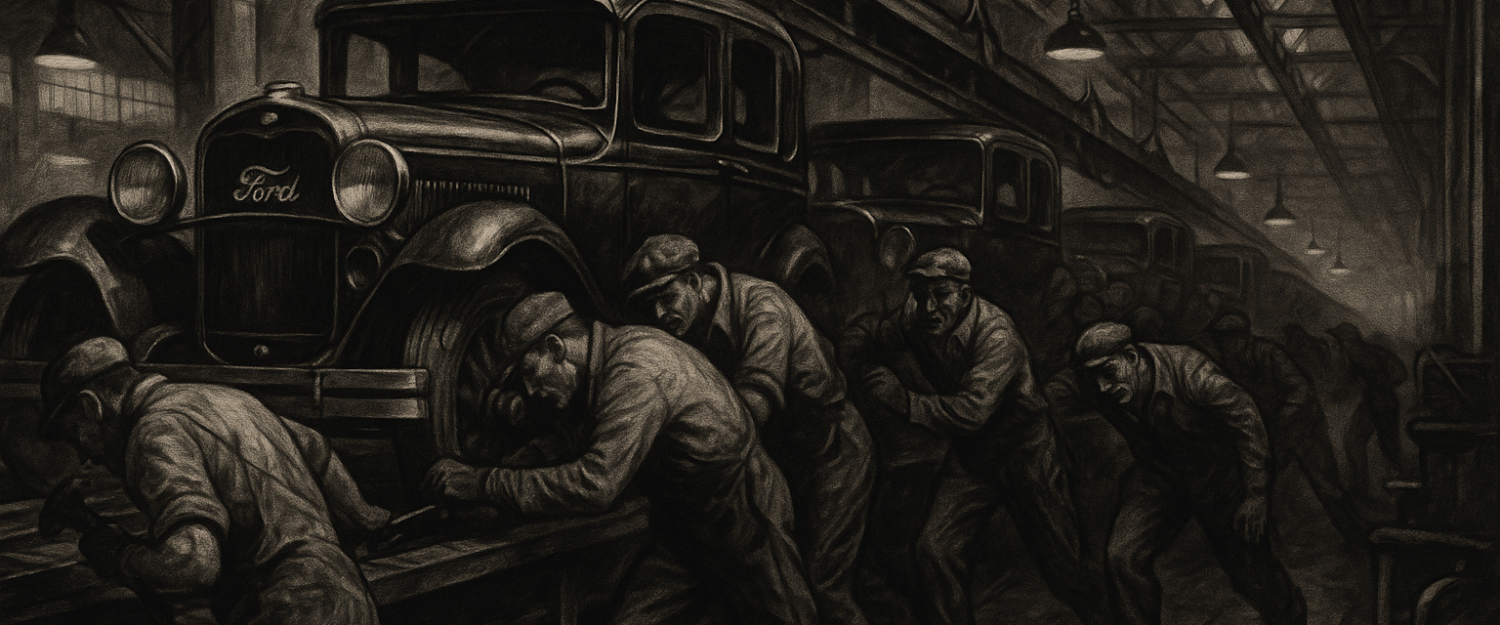
The story of UAW Local 249 in Kansas City is part of that larger transformation. Its members fought the same battles for recognition, dignity, and fair treatment that echoed across the nation. Their victories were not inevitable. They were the product of a moment when the political, legal, and social conditions aligned to make collective action believable. Workers dared to stand up because the world around them — the government, the law, the movement — gave them reason to believe they could win. And they did.
Today, those conditions have eroded. The institutions that once supported working people — a sympathetic government, strong labor law, and a confident union movement — have been weakened or dismantled. Inequality has grown, cynicism has replaced hope, and the idea that ordinary people can change the system feels distant again. It is now becoming clear that the decades-long erosion of workplace democracy, as Wagner predicted, is paving the way for the rapid slide into autocracy outside the factory, office, and shop. But the history of Local 249 and the 1930s labor upsurge reminds us that power begins in belief — and belief can be rebuilt. When workers once again trust that democracy belongs not only in the voting booth but in the workplace, they can remake the country, just as they did before.
Labor History Now looks at the past to light the way forward. Through the lens of the hard-fought New Deal battles waged by UAW Local 249 to win union recognition at Ford Motor Co., it tells the story of how working people stood up to corporate power—and won. This website explores what made those victories possible in the 1930s and what lessons they hold for us today, as unions fight to restore labor rights, rebuild the middle class, and defend democracy itself—on the job and in the nation.
© 2025 Pat Hayes
Great article! Looking forward to more of the same.
People today don’t realize it was the rise of the unions that was a major factor in creating the largest and most successful middle class in the history of the world. That’s why the American oligarchs hate unions and will do everything in their power to destroy unions for working families and, in turn, destroy our democracy for all of us!
I remember when UAW 249 members used to talk about “fighting a job” meaning collective action on-the-line to lessen the pace of work or understaffing. Can you write about that and why you don’t hear about it anymore?
Leonard (Len) Maydwell
Local 2209 UAW LUCA Rep Fort Wayne Assembly
Thanks. I’d love to her more about Local 249 and the sit-down strike.